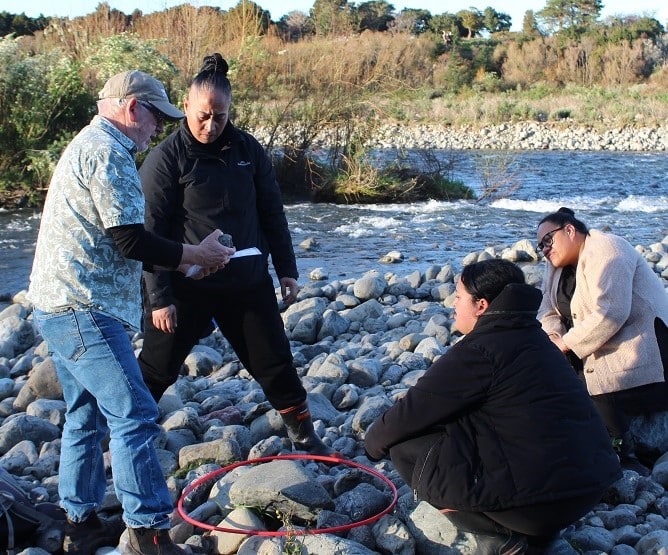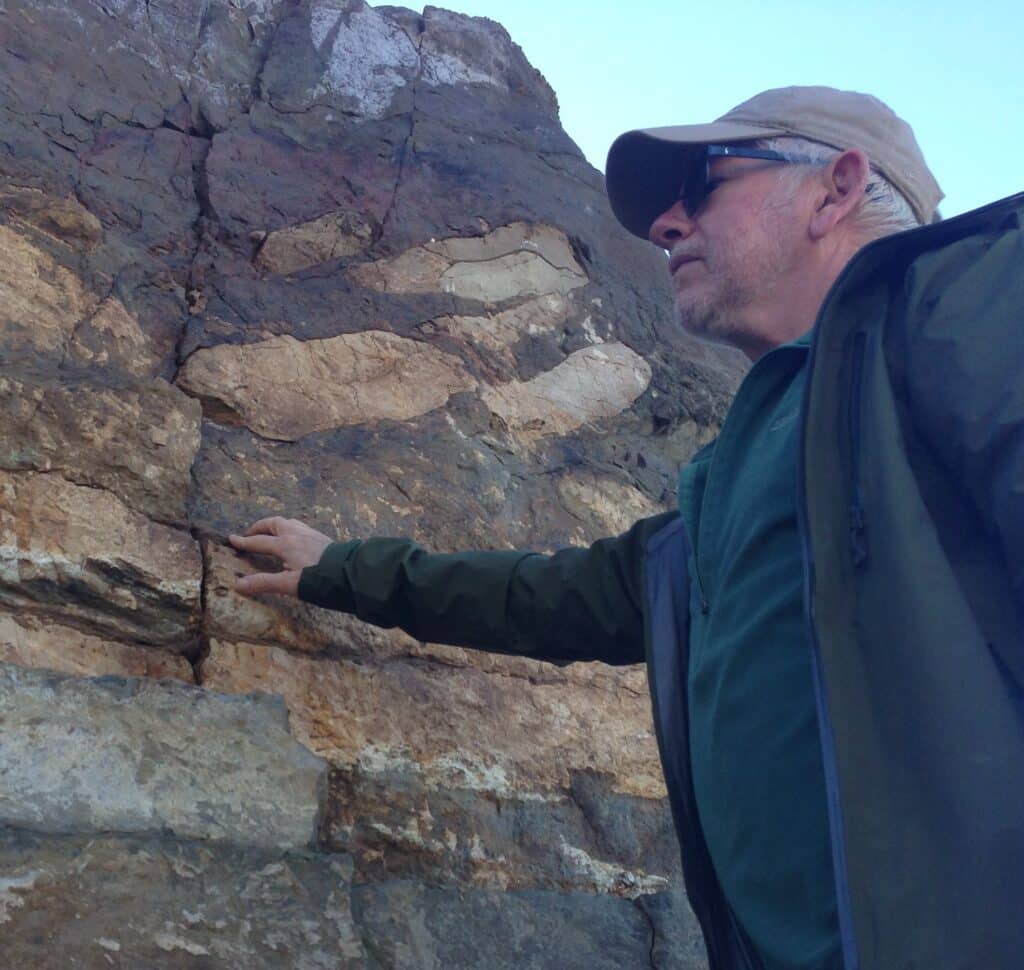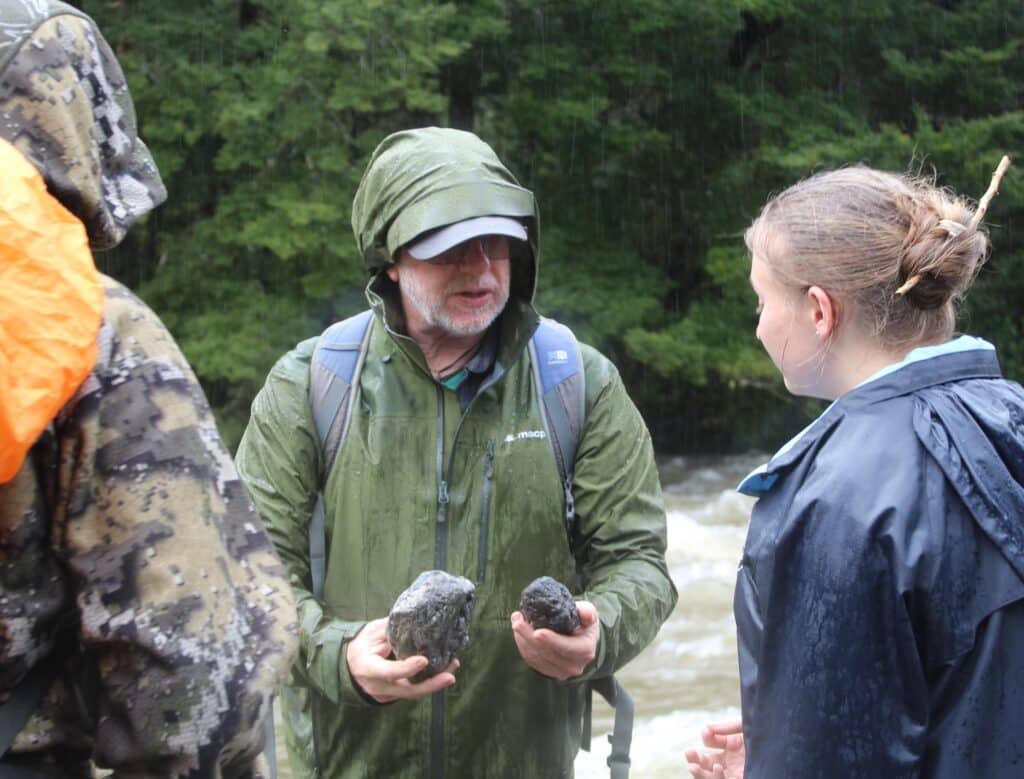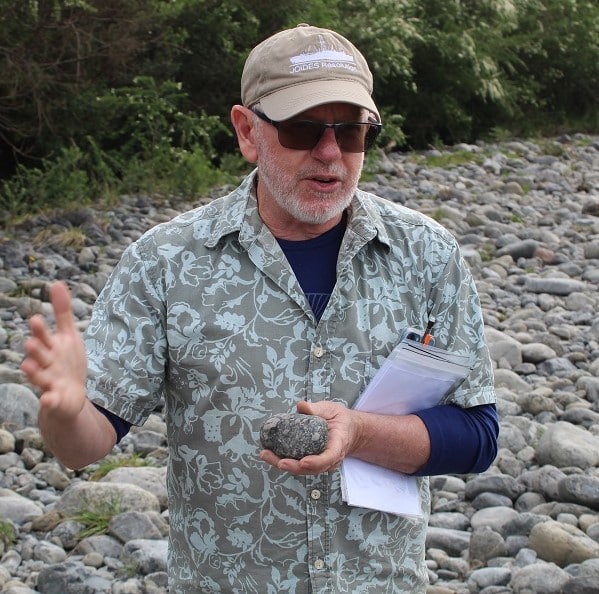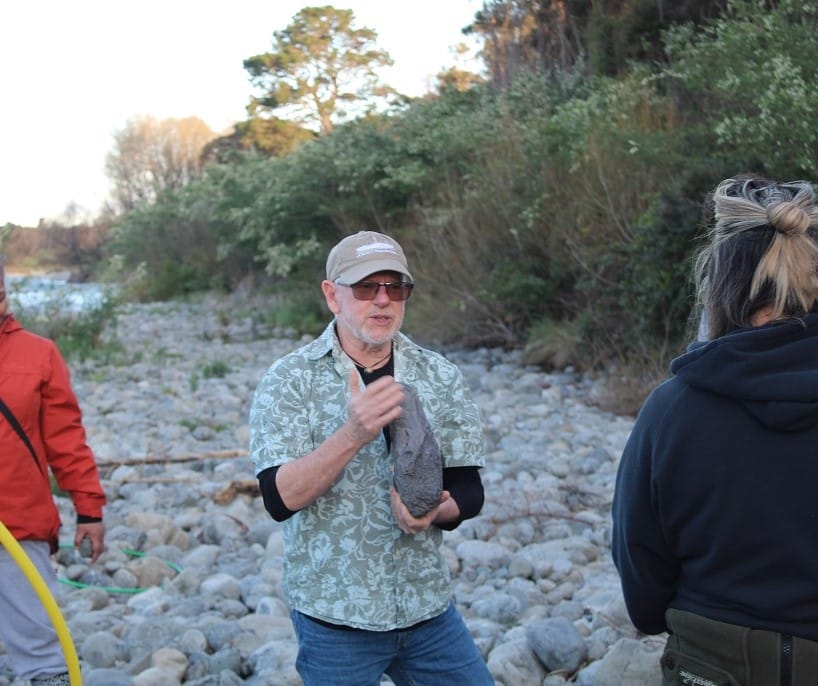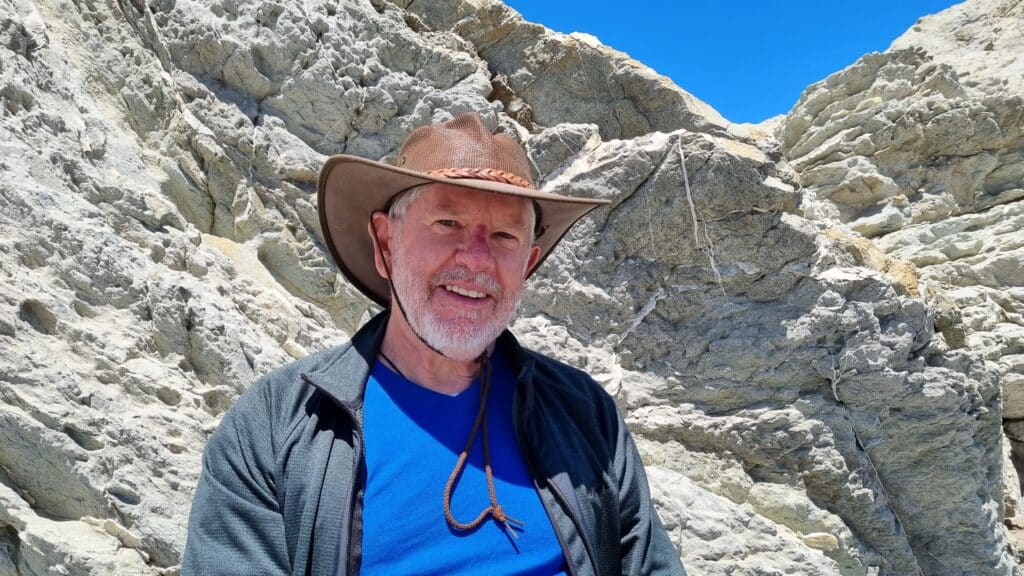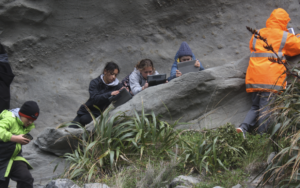
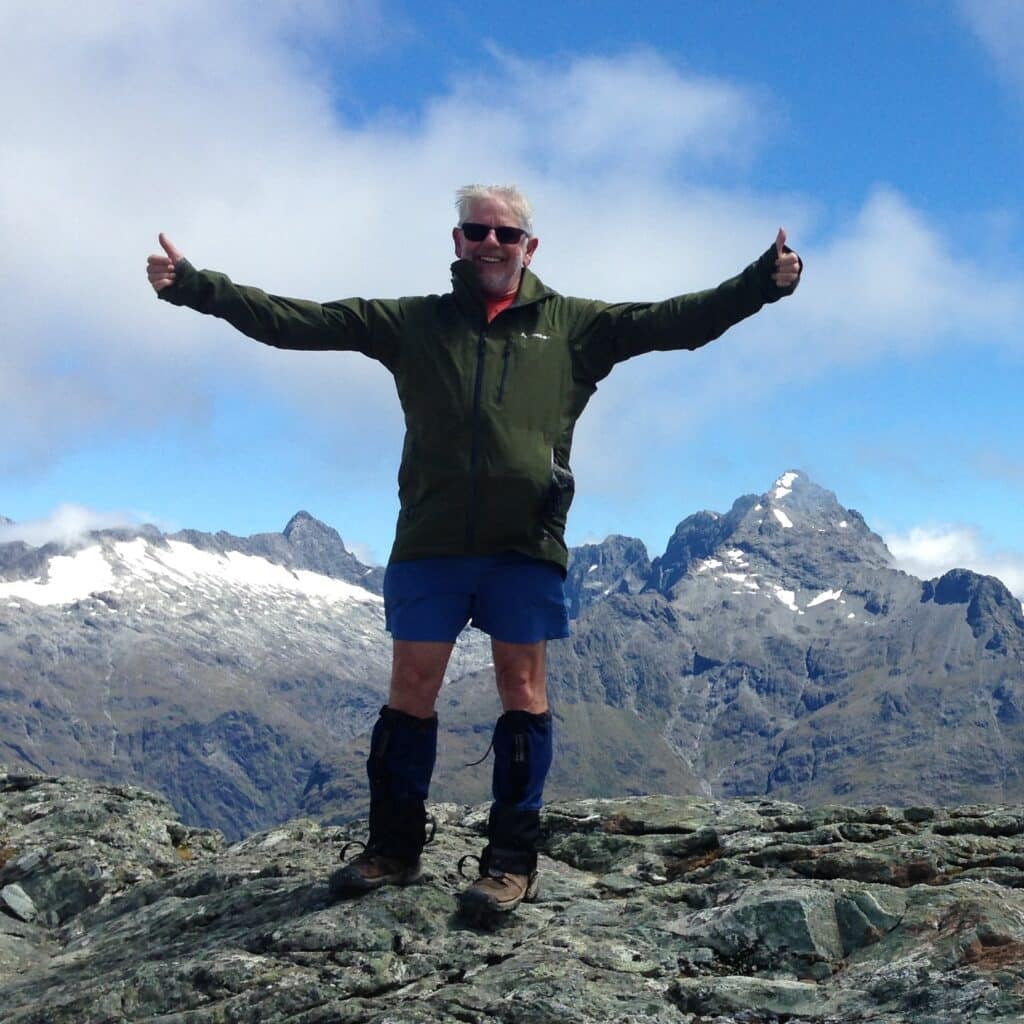
Chris worked at GNS Science for most of his career and specialised in the geological record of climate change, the environmental impacts of extinction events, and the geological record of a group of microscopic marine plankton called radiolarians. While at GNS Science, he helped establish several field-based outreach and engagement initiatives with schools and iwi groups, as well as the GNS Māori student internship programme.
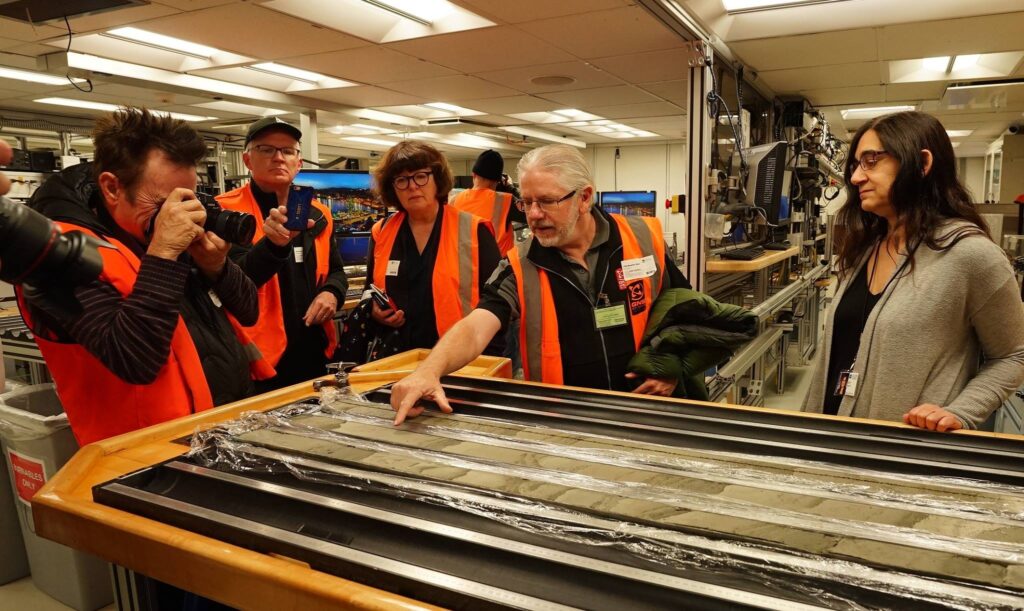
Chris also played a lead role in securing New Zealand’s membership to the International Ocean Discovery Programme (IODP), the world’s largest geoscience programme. He has participated in two IODP expeditions himself and organised several outreach projects linked to IODP, including the first onshore version of IODP’s School of Rock , Te Kura Kohatu.
Chris is now an Adjunct Professor at Victoria University of Wellington and continues research on ancient greenhouse climates while expanding his research interests into the basement rocks of Wairarapa.
As a parent of two sons with intellectual disabilities, Chris has a special interest in making science accessible and relevant to people who have struggled with conventional learning approaches.
Chris is based in Wairarapa and is keen to support field-based geoscience and environmental science initiatives in the region (and may sometimes be coaxed to visit other regions).
https://www.researchgate.net/profile/Christopher-Hollis